
Healthy Living, nutrition

5 Tips to Boost your Overall Health Based on The Dietary Guidelines

I’m all about living a healthy lifestyle and I honestly think that the best way to start is by switching to healthier alternatives of your favourite foods. I recently started reading the Dietary Guidelines for Americans: 2015-2020 and was shocked by some of the current health statistics which inspired me to write this blog!

When I say “food is medicine” I really do mean it! Did you know that eating the right foods and getting enough physical activity can reduce conditions such as obesity, cardiovascular disease, type 2 diabetes, cancer and osteoporosis?

Eating the right foods is so crucial when it comes to achieving optimal health and genuinely feeling amazing everyday!

Here are some quick facts about Nutrition and Physical Activity Related Health Conditions in the US:

Obesity:

  • For more than 25 years, half of the adult population has been overweight or obese.
  • In 2009-2012, 65% of adult females and 73% of adult males were overweight or obese.
  • Obesity is most prevalent in individuals aged 40 or over and least prevalent in adults with the highest incomes.

Cardiovascular Disease (CVD):

  • In 2010, cardiovascular disease affected about 84 million men & women ages 20 years and older (35% of the population).
  • In 2009-2012, almost 56% of adults ages 18 years and older had either prehypertension (27%) or hypertension (29%).
  • In 2009-2012, 100 million adults ages 20 years or older (53%) had total cholesterol levels >200mg/dL.

Diabetes:

  • In 2012, the prevalence of diabetes (type 1 and type 2) was 14% for men and 11% for women ages 20 years or older. (90% of total diabetes in adults is type 2).
  • Among children with type 2 diabetes, about 80% were obese.

The harsh reality is that there are so many diseases and conditions that stem from years of eating an improper diet and not getting enough physical activity. But don’t lose hope!

All you have to do is follow these simple steps to boost your nutrient profile and your overall health ๐Ÿ™‚

1. Make sure you’re getting enough exercise

Only 20% of adults meet the Physical Activity Guidelines. These guidelines establish how much exercise we should be doing daily/weekly in order to reduce the risk of the conditions mentioned above. Establishing and maintaining a regular physical activity schedule into your lifestyle can provide so many health benefits! Strong evidence shows that working out regularly helps individuals maintain a healthy weight, as well as lowers the risk of early death, stroke and high blood pressure.

Youth ages 6 to 17 years of age need at least 60 minutes of physical activity per day which should include aerobic, muscle-strengthening and bone strengthening activities.

Adults need a little over 2 hours of physical activity of moderate intensity and should do muscle-strengthening exercises on 2 or more days of the week.

Incorporating physical activity into your lifestyle can be easy and really fun! Try taking the stairs instead of taking the elevator, or even go for a nice family walk after dinner. Simple switches can really make a huge difference in your health a few years down the road!

Stay tuned for my next blog post which will have some fitness tips and workouts that you can do at home during the pandemic! ๐Ÿ˜‰๐Ÿ’ช๐Ÿผ

2. Follow a healthy eating pattern

A healthy eating pattern includes eating at an appropriate calorie level to support a healthy body weight and including a variety of nutrient rich foods in your diet to prevent deficiencies.

Individual calorie needs vary based on age, sex, height, weight and level of physical activity, however there are a few guidelines to take in mind when developing a healthy eating pattern:

  • Consume less than 10 percent of calories per day from added sugars.
  • Consume less than 10 percent of calories per day from saturated fats.
  • Consume less than 2,300 milligrams (mg) of sodium per day.

Following these general guidelines is really important, but I don’t want you to start doing math and calculating your calories. I don’t even count my calories! The main thing to takeaway is to reduce your intake of foods that contain added sugars, saturated fats, trans fats and sodium.

3. Make simple switches

Which brings me to my next tip- make simple switches! This doesn’t mean that you will never get to eat fettuccine alfredo again, it just means adding veggies or maybe even using a plant based milk for the sauce instead! It’s so much fun to experiment with different foods and making swaps while cooking at home.

An easy way to start getting more nutrient rich vegetables into your diet is to make a salad with your dinner. Buy some iceberg lettuce, cherry tomatoes, cucumber and apples for a fresh inexpensive salad. Using olive oil, salt and lemon juice is also much healthier than using store bought salad dressings which contain GMO ingredients such as canola oil.

A great way to incorporate more fruits into your diet is to make a fruit smoothie in the morning or for lunch. Fruit smoothies contain high amounts of antioxidants and other vital nutrients! So many of us live busy lifestyles where eating 5 fruits a day may be time consuming and hard to keep up with. But making a smoothie combines ingredients like berries, bananas and mangos that contain nutrients that you otherwise wouldn’t get!

Check out my smoothie recipes for 3 inexpensive and healthy smoothies that you can make tomorrow morningโ˜€๏ธ

4. Increase your intake of fruits, veggies, nuts and seeds

The average intake of fruits and vegetables in the US is largely below average which demonstrates the need for us to all start eating more foods from these food groups! I’m sure I’ve mentioned this already but fruits and vegetables are amazing for us and you can never eat too many! It’s really important to make sure that you’re eating a variety of fruits and veggies as they all contain different vital nutrients that are useful to our bodies in their own ways.

Here are some vegetable subgroups and examples, the goal is to increase your intake from each subgroup and make sure choosing different kinds from each category.

Even just choosing 3 additional items to add to your grocery list will make a positive impact on your health! Try grabbing some dark green vegetables next time you go grocery shopping, or even some red & orange vegetables. Have fun with it and always nourish your body.

5. Set Goals

Setting goals is important because it keeps you motivated, on top of things and sets a standard. I personally set 3 goals each morning which revolve around reading something new, meditating for at least 10 minutes and making a smoothie. Because of my routine, I am constantly improving my daily habits and lifestyle, while staying entertained!

I also set health related goals for myself- I make sure to get enough physical activity, I follow a healthy eating pattern and I try my best to incorporate fruits and vegetables into my diet whenever possible.

These goals are what keeps me healthy and feeling great every single day! I highly suggest developing some health oriented goals based on the guidelines that we discussed.
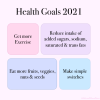
Doing more physical activity, eating more plant based foods and limiting your intake of added sugars, saturated fats, trans fats & sodium have all been proven to reduce nutrition related health conditions.


Takeaway

Thank you so much for taking the time to read my blog! If you have any questions at all, feel free to reach out to me through email: NaturalGlowellness@gmail.com or through my Instagram page. I love working with individuals to better their eating habits!โšก๏ธ

I also wanted to mention that all of the information in this blog is from the Dietary Guidelines For Americans: 2015-2020 Eighth Edition. A 2020-2025 Edition was just released on their website and has a free download. If you’re as interested in health and wellness as I am, I highly suggest it! It’s a great read and has some great facts about healthy eating! Just click the above highlighted link ๐Ÿ˜

Good luck on your health journey!!

Uncategorized

Jump into 2021 with The 14 day Natural Glow Detoxโšก๏ธ

This year has been extremely difficult and unpredictable to say the least. With gyms and most health food stores being closed, it’s hard to stay on top of your health and have motivation.

So I decided to create a 100% all natural detox that will help you lose 5-10 pounds at home just by making healthier food choices! This detox will help you get back on track, lose weight and eliminate toxins from your body all at the same time. When I created the Natural Glow Detox, my main goal was to provide achievable ways to lose weight through healthy eating and to educate my clients on what foods are good vs bad.

I also wanted to make it affordable and accessible for everyone which is why I am offering it at just $15 CAD!

For less than the amount of money you would spend on coffee a day, you can put it towards your health! My detox program contains everything you need to become healthier, lose weight and jump into the new year with a new mindset.

If you are interested in joining my detox program, please email me NaturalGlowellness@gmail.com or message me on Instagram to receive the full detox package! ๐Ÿ™‚

I am so excited to work with you and help you get that natural glow this 2021โœจ

I also just wanted to take a moment to quickly thank each and every one of my current clients! Through working with you, I have been able to learn, grow and build on my knowledge. I could not be more thankful for everything I have gained through working with such amazing individuals โค๏ธ


nutrition

The Power of Antioxidants

As you know, I love making smoothies and fresh fruit juices every morning! One of my favourite ingredients to put in my smoothies are mixed berries because they’re high in antioxidants. Antioxidants are molecules that fight free radicals in the body and decrease the risk of conditions such as diabetes, heart disease & cancer. Antioxidants are also crucial for youthful looking skin!

But before we get into the amazing benefits of antioxidants, we must first discuss free radicals and oxidative stress.

Free Radicals and Oxidative Stress

Free radicals are unstable molecules that are highly reactive. They are constantly being formed in our bodies and are necessary for certain functions such as helping our cells fight off infections. However, there must be a balance between free radicals and antioxidants, otherwise oxidative stress will occur.

Over a long period of time, oxidative stress can accelerate aging, damage DNA and even lead to cell death.

Certain lifestyle factors and dietary habits can promote free radical formation and therefore cause oxidative stress:

  • Smoking Cigarettes
  • Alcohol Consumption
  • Toxins
  • Air Pollution
  • Intense Exercise
  • Too much sun exposure
  • Dietary Habits- Red & Processed Meats
  • Antioxidant Deficiency

All About Antioxidants!

Alright so now that we have talked a lil bit about free radicals and oxidative stress, let’s talk about antioxidants! So as I mentioned earlier, antioxidants are molecules that fight off free radicals in our bodies preventing oxidative stress. Our bodies can generate antioxidants such as glutathione, but we should really be getting our source from fresh fruits and vegetables. Plant based foods are a great way to get your fix because they contain varying kinds of antioxidants such as Vitamins C and E.

Different Types

There are two types of antioxidants: water-soluble and fat-soluble.

Water soluble antioxidants work in the fluid inside and outside of cells, whereas fat-soluble antioxidants work largely in the cell membrane. The three most important dietary antioxidants include Vitamins C, E and flavonoids.

  • Vitamin C is a water-soluble antioxidant that protects against oxidative stress induced damage. It’s also an essential nutrient that boosts our immunity and promotes the look of healthy skin.
  • Vitamin E is fat-soluble and also protects against oxidative stress. Vitamin E is great for the skin because it protects our cell membranes and helps neutralize free radicals.
  • Flavonoids are phytonutrients that are found in plant based foods. They’re beneficial in reducing oxidative stress, boosting immunity and promoting overall health.  

Plant foods that are high in antioxidants include berries (blueberries, strawberries, goji berries, raspberries), artichokes, kale, spinach and beans.

It’s so important to make sure that you are getting a decent amount of antioxidants daily! Antioxidants are crucial to our health and are an amazing skin food.

My favourite way to add antioxidants to my diet is making smoothies every morning! Even if berries aren’t in season, frozen berries are a great choice and they’re about the same cost wise.

Health Tip

Next time you go to the grocery store, grab a bag of frozen raspberries, mixed berries and blueberries. Throw some in a blender with some fresh bananas and soy milk and you now have the perfect skin food! ๐Ÿ™‚

Sources

Publishing, H. H. (n.d.). Understanding antioxidants. Retrieved from https://www.health.harvard.edu/staying-healthy/understanding-antioxidants


nutrition

Vitamin B12 Basics & Mass Supplementation in Livestock

We have all heard about Vitamin B12 and have possibly asked someone following a vegan diet where they get their B12 from. However, many people donโ€™t actually know where B12 is made, how we obtain B12, and how much we should consume based on the scientific consensus. Thus, I have decided to write a blog on a few key points on this very important vitamin. 

What is Vitamin B12?

Vitamin B12 also known as Cobalamin is a water-soluble vitamin that plays a very important role in many bodily functions. Vitamin B12 is one of eight B vitamins, and is involved in keeping the body’s nerves & red blood cells healthy and even helps in making DNA. This vitamin is only produced by a few organisms such as bacteria and archaea (single celled organisms similar to bacteria).

These organisms were commonly found in grass, soil, and water streams. Usually the B12 producing bacteria are eaten by cows and other animals grazing on the fresh grass. Once eaten, the bacteria resides in the cowโ€™s digestive system (specifically in the gut, or stomach) and produces vitamin B12 as a by-product from its metabolism. This molecule is essential for cows and other grazing animals. However, this beautiful and natural process is not very common anymore. 

Industrialization and factory farming have completely changed this natural process in order to maximize profit, and dominate the food market. So, the tiny little organisms previously mentioned, are not part of this process anymore, the fresh grass and pure water are also not in the picture anymore either.

B12 And Supplementation in Livestock

In order to sustain the dietary need for Vitamin B12, a new process needed to be created called supplementation. The majority of animal products purchased today are now supplemented with B12 in their animal feed, and/or through injectable B12. Crazy right?  

Supplementation is now required because animals used for food do not have access to fresh air, grass or water. Even if livestock is “free-range” or raised outside, there is a lack of Cobalt in the soil which is crucial for the tiny little organisms to survive. Fields that contain less than 2ppm of Cobalt are deemed unfit for grazing and therefore Vitamin B12 is supplemented into animal feed or injected directly.

It is crucial for people to understand that everyone who consumes animal products is indirectly supplementing with B12, without even knowing it!

There is nothing wrong with supplementation of B12. In fact, the Institution of Medicine has recommended anyone who is vegan, vegetarian or over 50 to directly supplement with B vitamins. However, this does not mean that you should recycle all of the stuff added into animal feed in your body to enjoy the benefits of vitamin B12. Vitamin B12 derived from animal products also comes with all of the harmful factors found in meat. Therefore, you can limit your intake of animal products containing added B12, and instead you can add fortified foods like soy milk (full of phystoestrogens) or nutritional yeast to your diet which are more pure ways to get your daily dose.

Vitamin B12 is crucial for us, this tiny little molecule helps red blood cell formation, aids in neurological functions, DNA production, and many other physiological processes. Thus, we need B12 to be present in our diets and everyday lives in order to achieve optimal health. 

Nutritional Yeast: A Natural & Healthy Way to obtain B12

Nutritional yeast is a great way to naturally get your daily dose of B12. Nutritional yeast is a kind of yeast that’s grown specifically to be used in food products and has a cheesy, nutty flavour. I personally love it and use it on everything! Not only does it add flavour to foods & sauces, it also has many health benefits:

  • It contains so many B vitamins! One tablespoon of nutritional yeast contains 30-80% of the RDI (reference daily intake) for B vitamins.
  • It’s a complete protein. That’s right- just one tablespoon has 2 grams of protein and all nine essential amino acids!
  • It contains lots of trace minerals. Trace minerals are important because they aid in gene regulation, growth, immunity & metabolism. One tablespoon contains 2-30% RDI of trace minerals such as zinc, selenium and manganese.

I usually get nutritional yeast from a bulk food store such as bulk barn because that’s where it’s the cheapest!

Recommended Daily Intake

The National Institute of Health recommends that adults (over 14) should consume about 2.4 mcg of vitamin B12, pregnant woman 2.6 mcg, and breastfeeding woman 2.8 mcg.

However, Dietary B12 supplements usually in the form of Cyanocobalamin are not totally absorbed when consumed, for example only 10-mcg of a 500-mcg oral supplement is actually absorbed by our bodies. So don’t get spooked out by the large dosages advertised on the tablets because Vitamin B12 is water soluble, meaning that any extra B12 in your body will be excreted through urination.  

However, vitamin deficiencies are very common and many of us may be deficient without even knowing it. 

Vitamin B12 deficiencies are commonly associated with anemia, fatigue, weakness, loss of appetite and weight loss. Other side effects of B12 deficiencies may be numbness and tingling in feet, depression, confusion, poor memory, and various others. However, People deficient of B12 can be treated with B12 injections in order to increase the vitamin absorption in the body.

The main reason why people become Vitamin B12 deficient is because of inadequate absorption. Older adults who suffer from digestive conditions such as Atrophic Gastritis typically have difficulty absorbing vitamins & nutrients due to a lack of stomach acid, thus, B12 deficiencies are more common amongst older individuals. People who have been diagnosed with intestinal conditions such as Crohnโ€™s and Celiac disease also have difficulties absorbing vitamin B12 from their diets. That’s why direct supplementation of B12 from fortified foods and B12 oral supplements are the best remedies for a diet with low levels of B12 absorption. 


Sources

Bernhardt, C., Zhu, X., Schรผtz, D., Fischer, M., & Bisping, B. (2019). Cobalamin is produced by Acetobacter pasteurianus DSM 3509. Applied Microbiology and Biotechnology,103(9), 3875-3885. doi:10.1007/s00253-019-09704-3

Rizzo, G., Laganร , A., Rapisarda, A., Ferrera, G. L., Buscema, M., Rossetti, P., . . . Vitale, S. (2016). Vitamin B12 among Vegetarians: Status, Assessment and Supplementation. Nutrients,8(12), 767. doi:10.3390/nu8120767

Herbert, V. (1988). Vitamin B-12: Plant sources, requirements, and assay. The American Journal of Clinical Nutrition,48(3), 852-858. doi:10.1093/ajcn/48.3.852

Vitamin B-12. (2017, October 17). Retrieved from https://www.mayoclinic.org/drugs-supplements-vitamin-b12/art-20363663

Institute of Medicine. Food and Nutrition Board. Dietary Reference Intakes: Thiamin, Riboflavin, Niacin, Vitamin B6, Folate, Vitamin B12, Pantothenic Acid, Biotin, and Choline. Washington, DC: National Academy Press, 1998.

Office of Dietary Supplements – Vitamin B12. (n.d.). Retrieved from https://ods.od.nih.gov/factsheets/VitaminB12-HealthProfessional/#en12

Vitamin B12. (n.d.). Retrieved from https://www.dsm.com/markets/anh/en_US/Compendium/ruminants/vitamin_B12.html

nutrition

Negative Effects of Drinking Coffee & Natural Ways to Boost Energy

Coffee is the most popular beverage in the world with over 400 billion cups being consumed each year. It is estimated that over 50% of the American population over the age of 18 consumes coffee daily- that’s 150 million people drinking coffee every single day! You may think of coffee as one of those things that isn’t that bad for you, but it does have an impact on your natural ability to stay awake and focused. Not to mention, buying a coffee or two everyday eventually adds up and becomes an unnecessary expense over time.

Let’s talk about some negative side effects that are associated with consuming coffee on a regular basis, and then explore some healthier alternatives!

Caffeine works on the Central Nervous System (CNS) and is classified as a drug. Because caffeine stimulates the CNS, it’s classified as a “Stimulant”. Stimulants typically increase mental alertness and energy levels by elevating heart rate, blood sugar, blood pressure and constricting blood vessels. The energizing effects of caffeine usually last 2-5 hours which later result in withdrawal symptoms or an energy crash. It’s important to note that most drugs have addictive qualities and it’s best to manage your consumption when it comes to caffeinated drinks or snack foods.

Consuming caffeine 6 hours before bedtime has been proven to substantially reduce amount of sleep. One of the most common side effects associated with stimulants is that they have a negative impact on your sleep schedule. A study found that drinking a cup of coffee 6 hours before bedtime has significant disruptive effects on sleep and reduces the amount of sleep time. This means that if you go to bed at around 10:00 pm, it’s best to not drink a cup of coffee past 4:00 pm, otherwise it may result in insomnia related symptoms.

There are many general side effects associated with consuming caffeine daily. These side effects include headaches, sleepiness, low energy levels, mood swings and feeling shaky or jittery throughout the day.


Now let’s talk about some healthier alternatives to get more energy throughout the day that won’t affect your sleep schedule.

Drink a banana smoothie in the morning

Banana smoothies are loaded with vitamins, minerals and electrolytes. Drinking a banana smoothie every morning is a great way to naturally boost energy and activate your metabolism. Bananas are high in potassium, and contain three naturally occurring sugars- sucrose, fructose & glucose. Because bananas are also high in fiber, glucose levels are sustained in blood which provides a steady source of energy for a longer period of time! This means no coffee crash!

Try Drinking Ginseng Tea

If you genuinely enjoy drinking something warm in the morning or throughout the day, try drinking ginseng tea instead of coffee. Ginseng is an excellent herb for tonifying your energy or your Qi. It’s a great alternative to drinking coffee because it has been proven to effectively fight fatigue and naturally boost energy levels. Not to mention, ginseng is full of beneficial vitamins and minerals! Drinking ginseng tea has many other favourable health benefits too such as powerful antioxidant and anti-inflammatory properties, improving brain function and boosting the immune system.

Take a cold shower when you wake up. I know this sounds dreadful, but many studies actually suggest that taking a cold shower is a great way to wake yourself up. Cold showers increase mental alertness, reduce stress and promote weight loss. If you have trouble waking up in the morning, try running a cool shower and focusing on your breathing. You’ll feel so fresh and revitalized when you get out!

Focus on your diet & nutrition. A lot of people feel tired throughout the day because they are not getting adequate nutrients. Snacking on foods such as apples, strawberries, oranges and berries is a great way to get nutrition and boost energy at the same time. In the long run, make sure that your meals are nutritious and avoid eating out!


Thank you so much for taking the time to read my blog post! I hope that I inspired you to be more conscious of what you consume daily and make healthier choices!

Healthy Living

Natural & Simple Ways to Get Better Sleep

We have all been there… tossing around for hours trying to sleep and not knowing what to do. You are not alone! An estimated one in four Americans suffer from insomnia, but luckily 75% of those cases aren’t considered chronic. This means that there are ways to get a good nights sleep without having to resort to pills or other drastic measures.

Here are 4 simple tips on how to improve your sleep:

1. Get more exercise:

One of the main reasons why people suffer from symptoms associated with insomnia is because they did not get enough exercise throughout the day. You may travel to and from work or school, but physical activity is different than exercise. If you have difficulty falling asleep at night, try going for a 30 minute jog around your neighbourhood or even do an at home workout. The main goal is to increase your heart rate through exercise so that you actually feel tired afterwards.

2. Take a hot bath before bed:

This may sound ridiculously simple, but a hot bath can be so relaxing if you think of it as something therapeutic, rather than just washing off before bed. A study found that taking a bath at just the right time and right temperature can improve ones quality of sleep. According to the study, bathing 90 minutes (1-2 hours) before bed in very warm/hot water can help you fall asleep 10 minutes faster than normal. Try adding it into your self-care routine and you will feel so fresh in the morning!

3. Avoid Electronics before bedtime:

Laying in bed while scrolling on social media can become a very unhealthy habit if you let it. It may be difficult to fall asleep some nights, but going on your phone and looking at stuff online will actually make you stay awake for longer. Not only does it increase your brain activity, but blue light affects melatonin levels. If you are someone who is guilty of this, try keeping your phone away from your bed at night. It will make it a lot easier to not just reach over and instinctually grab it!

4. Practice Meditation:

Meditation is great for so many reasons! It allows you to be in the moment, focus on your breathing and even promotes sleep. Having a busy schedule may not allow you to sit down for 30 or so minutes and focus on relaxing, but you certainly have the time right before bed! Try laying down in bed and breathe in through your nose and out through your mouth, while focusing on relaxation & peace. You may find that you still have a million thoughts racing through your mind, but with practice and patience, you will master the skill.

Other Helpful Tips:

  • Make sure your room is adjusted to your needs. If you get hot at night try buying a fan or sleeping with lighter blankets. It’s important to make sure that your environment is set just the way you like it.
  • Make sure your bed is clear of clothes and clutter. Always clear off your bed before you sleep, otherwise you will feel stressed throughout the night.
  • Invest in nice bedding. If you haven’t bought a new sheet set or comforter in a while- now is the time! You would be surprised by how much comfy bedding will change your sleeping experience.

Thank you for reading my blog on how to get better sleep! I hope that you can take something away from it and apply it to your lifestyle. If you enjoyed this blog, please check out my posts here.